
December 23, 2021
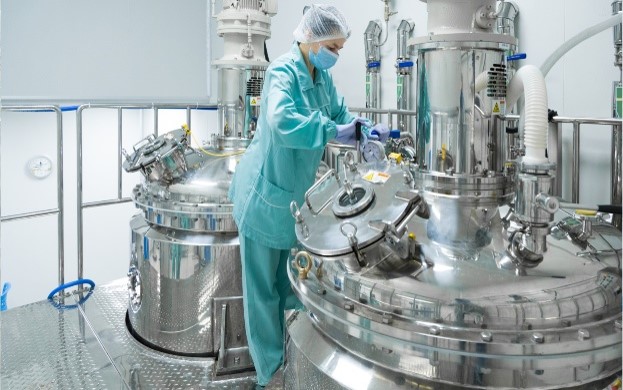
Toll Blending is a common service for chemical companies (e.g.: “toll blender”) to manufacture/fulfill chemistry blending for a partner in order to reduce the partner’s production risks or capital investments. RBP Chemical Technology works with partners around the globe to provide this service, as well as, to optimize their chemical processes. Here are six reasons why customers turn to RBP for their toll blending needs.
October 7, 2021
We take pride in is our core competency, and that’s being experts in surface chemistry. We understand the function of cause and effect of chemistry with all mediums, from printing press room, all the way to medical chemistry. When you use a press room, as an example, you’re touching many different surfaces. You’re touching everything from organic items like paper to aluminum plates and carbons. You’re also touching hydrocarbon substrates like plastics, all the way to using other chemistries, like ink. When it comes to chemistry handling, and we want you to do it safely. Here are our six solutions for safer chemistry handling.
December 12, 2012
Gas Ghosting/Chemical Ghosting
The transfer of a printed image from the front of one sheet to the back of another.
December 12, 2012
Toning is the inability to remove fine ink particles that deposit on to the non — image area of the plate.
December 12, 2012
Ink rollers cannot except or transfer ink.
December 12, 2012
Gear streaks are always in parallel to the cylinder axis.
December 12, 2012
Fountain solution does not have the ability to clean the non-image areas of the plate.
December 12, 2012
Bands of ink that form and look like rail road tracks. They appear on the roller train and may transfer and appear in the print. They may appear in rows across the sheet anywhere from the lead edge to the tail edge.
December 12, 2012
Inability for plates to clean up quickly at startup and restart of press
December 12, 2012
The printed ink film is dry, but has excessive rub and scuffing when going through the delivery and finishing processes.
December 12, 2012
Ink may appear to be drying out in the roller train or press seems to be unable to adequately supply the proper ink water emulsion to the plate.
December 12, 2012
The shadows and tight reverses start to fill in and become “plugged” with ink during the run.
December 12, 2012
Fine lines and dots disappear. Work loses clarity and printing becomes streaky with weak solids and densities. Images disappear.
December 12, 2012
Plates become sensitive during the run, and will start to transfer ink in the non- image area.
December 12, 2012
Non-Image/image area piling is ink and paper fiber build up on the blanket that prevents proper offset.
December 12, 2012
Ink or other material accumulates on the blankets or transfer cylinders on the outside dimensions of the paper stock being run.
December 12, 2012
Picking or lifting of paper coating onto blankets, plates, and rollers.
December 12, 2012
pH and conductivity drift out of specification
December 12, 2012
Printed solid areas are not uniform or smooth in appearance. Ink density is uneven or light.
December 12, 2012
Fine droplets of ink formed on the rollers fly off creating a mist.
December 12, 2012
Streaks, tracking, or ink smearing due to the folding or finishing operations through mechanical contact.
December 12, 2012
Excessive paper lint and or filler depositing in both the image and non-image areas of blankets and or plates.
December 12, 2012
Ink is transferring from one page to the next or book to book when completed.
December 12, 2012
Ink pigments breakdown in fountain solution causing a light discoloration in the non-image areas
December 12, 2012
Ink backs away from ink ball. This causes the print to become starved for ink