
December 8, 2020
Southern Lithoplate’s (SLP) Strategic Alliance, formed in 2006, continues to grow and evolve with new partners that enhance the organization’s advantages for US printers seeking affordable, quality consumables and services in a single-call/single source format. RBP Chemical Technology Inc., is the newest partner to join the trendsetting Alliance, SLP announced this week
February 5, 2020
Liquid Gold™ Zero is an environmentally friendly, VOC-free fountain solution for coldset printing applications. Liquid Gold™ Zero is formulated in both a mild acid and a neutral version. This product is a California VOC-compliant proprietary blend formulated specifically for processless plates, but will work on all plates. In addition, proper use of the Liquid Gold™ Zero has been proven to minimize hot and cold startup waste.
July 31, 2019
As a leader in specialty chemicals for the printing industry, we are proud to announce the release of a new state-of-the-art aqueous coating cleaner, AlKalene™ LT. This new product is designed to remove dry ink from press parts in the flexo-packaging industry.
June 13, 2019
Brighter, more vibrant colors in coldset printing applications? It’s possible with LIQUID GOLD 290 from RBP Chemical Technology . This mildly acidic fountain concentrate was specifically developed to enhance the color brilliance while fighting blanket buildup and piling – the leading causes of duller print images, ghosting, scumming and ink going where it doesn’t belong.
October 8, 2018
Newsprint and coldset pressrooms choose Liquid Gold 820 fountain concentrate to maximize the performance of a wide array of plates – including processless. Liquid Gold 820 comes in neutral, mild acid, and hard water versions to meet all users’ water conditions and is formulated with special ingredients to keep the non-image area free of unwanted ink, resulting in sharp, clean print, and quick start ups that reduce paper waste. Like all RBP fountain concentrates, Liquid Gold 820 contains the latest in biocide technology to keep the dampening system clean and free of biological growth.
March 7, 2018
RBP Chemical Technology, the world-class supplier of proprietary chemicals and delivery devices for the coldset printing industry, is proud to introduce the latest in cleaning technology for pressrooms.
May 18, 2017
The use of processless plates has been gaining traction for some time now. There are several advantages to using these plates. The most advantageous is the elimination of the chemistry used to develop and remove the non-image area of the plate. These chemistries typically have high alkalinity and can be difficult to handle as well as dispose of. By eliminating this step you remove any potential problems with the processor, associated chemistries and plate waste as the processor is completely eliminated.
March 17, 2016
With the ever changing plate technology there is always a need for deletion pens in the pressroom. RBP Chemical Technology offers a variety of deletion pens for the newer plate technologies such as the violet and thermal ctp plates. You will find that deletion pens come with different chemistries; they may contain various solvents for removal of image area, water, and an acid to etch the aluminum oxide. Picking the right chemistry for the plate you are using is important. Certain types work better on thermal plates vs. the violet plates. Are the plates baked, are they process less types, or violet? Asking the right questions and finding the right pens can make your job a whole lot easier on press.
March 17, 2016
From poor print quality, the need for more frequent blanket washes, trouble printing solids and “smashed” blankets – piling is one of the more common challenges in today’s pressroom. In fact, many printers today have come to accept piling as a problem that is inherent to offset printing. However, understanding the causes of piling and implementing quick and effective solutions can go a long way in improving print quality and reducing paper waste and press downtime.
January 14, 2015
As the global movement towards sustainability continues to gain momentum, more and more printers are incorporating environmentally-conscious practices into their pressrooms. Efforts to find greener printing solutions focus on minimizing waste, reducing consumption of vital resources and developing long-term sustainability practices.
One important way today’s printers can reduce their environmental footprint is through the use of Low VOC washes and solvents.
Low VOC products had a bad reputation early on in terms of quality, but things have changed. Through years of experimentation and research, RBP Chemical Technology has greatly improved the performance and quality of these product lines. Today’s products are not only the smarter choice for the environment, but are also very effective.
October 22, 2014
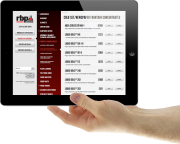
Ultra Violet (UV) printing is different from conventional printing in a number of ways. The basic elements – ink and paper – are the same, but the overall process and the products involved are completely unique.
In conventional printing, ink dries when solvents found in the ink evaporate into the air and absorb into the paper. UV inks, on the other hand, are cured on press via UV lamps.
Combined with high-quality products, UV printing offers a wide range of benefits, making it the preferred choice for a wide range of unique and high-quality print work.
August 12, 2014


Never sacrifice quality – learn the importance of choosing high-quality products for your Pressroom
If you have spent any time in a press room or manufacturing facility, you may have heard the expression, “Garbage in = Garbage out.” In other words, the quality of your end product is only as good as the quality of the materials you use to produce it.
In order to provide your customers with a high-quality product, you have to invest in the quality of the materials you purchase for your pressroom. Unfortunately, many printers have learned this lesson the hard way.
July 15, 2014

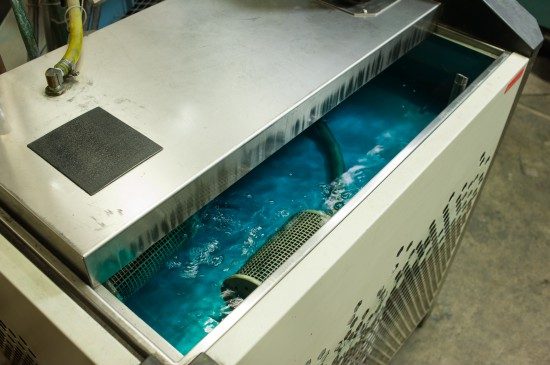
RBP Chemical Technology first introduced the Unitrol® 2500, a one-step sheetfed fountain concentrate at the Chicago Print Show in September 2013.
Prior to the launch of the Unitrol 2500, chemical manufacturers were unsuccessful in producing a quality one-step fountain concentrate for the sheetfed department.
Given that the web department has had one-step founts for several years, why was finding a solution for the sheetfed department so difficult?
June 30, 2014
 RBP rolled out LoxClean, a newly developed anilox roller cleaner formulated to remove and lift embedded ink from all types of anilox rollers.
Discover what makes this product the right choice for your flexo graphics operation:
March 17, 2014


January 20, 2014

 RBP makes international headlines again:
Renowned journalist, Sashi Nair, publishes an insightful story in the January issue of RIND Survey.
January 10, 2014

 Cover Feature Story: DECEMBER 2013
The Press Institute of India published a feature story about RBP Chemical Technology and its strategic license agreement with Kapoor Imaging in its December issue of RIND Survey.
December 3, 2013
Is there more to the average plate cleaner than meets the eye? Is there one plate cleaner that can act as a quick fix and solve press and plate cleaning needs? Why don’t plate cleaners work the same all the time? These are some of the questions that RBP technical service reps hear regularly. The following article will try to address them and help take the mystery out of choosing the proper plate cleaner for the job.
November 20, 2013
“Customer satisfaction is a flawed idea,” says Wayne Renken, CEO of SensArray Corp., in an issue of Electronic Business News. How can that be? Renken says that by focusing on “doing things right”, by improving the status quo, we may be blind to a novel and potentially more effective approach. To be truly valuable suppliers we should broaden our goal from customer satisfaction to a far more powerful concept — customer success.
November 13, 2013
On November 15 1990 President George Bush signed the Clean Air Act into law, legally restricting the output of selected air pollutants by cities and industry. The Act addresses multiple sources and types of air pollution, but for the purposes of this discussion, we will deal with the “VOC” [volatile organic compound] component of “ground level ozone”, resulting from the material choices and methods used in Printed Board fabrication. “Ground-level ozone (O3) is the major component of smog. Ozone is not emitted directly into the air, but is formed through complex chemical reactions between precursor emissions of volatile organic compounds (VOC) and nitrogen oxides (NOx) in the presence of sunlight.”
A simplified schematic of the reaction follows:
October 29, 2013
As anyone in the newspaper business knows, printing good quality color is tough. Poor ink density, background toning and a washed out appearance are all common problems. However, advertisers and consumers alike continue to demand more and more color, challenging newspapers to improve their quality while still containing costs.
October 16, 2013

NEWS ANNOUNCEMENT:
10/16/2013–RBP Chemical Technology, Milwaukee, Wisconsin, announced today an agreement with Kapoor Imaging Pvt Ltd to license the blending and distribution of its pressroom chemistries line in India. After a presence in India for more than six years, RBP recognized the need to partner with a locally-respected supplier to support its efforts in growing its business in the region and globally.
September 30, 2013
August 15, 2013
As summer warms up so does the pressroom – all too often pressmen experience an increase in growth and keeping the press/equipment clean can become more difficult. Fountain solutions contain biocides to control growth, but at times they are just not enough to keep the press at peak performance. Controlling biological growth and keeping the press mix clean can be accomplished by using UV light sources, ultrasonic methods, oxidizers such as bleach or peroxides, temperature, and biocides.
August 13, 2013
In Booth #3044 during PRINT13, RBP will introduce Unitrol® 2500 fountain solution, updated to run on newer, high-speed sheetfed presses.
Sheetfed, commercial and packaging printers running newer high-speed presses are demanding updated fountain solutions to replace alcohol or alcohol replacers. RBP Chemical Technology, Inc., Milwaukee, Wis., (www.rbpchemical.com) is responding to this need with the launch of its new Unitrol® 2500, a one-step sheetfed fountain concentrate during PRINT13, September 8 – 12, 2013, McCormick Place, Chicago, IL. RBP, a nearly 60-year-old veteran developer, manufacturer and distributor of high performance chemicals and consumable supplies, has created the one-step fountain concentrate to run on all types of sheetfed presses.