May 24, 2022
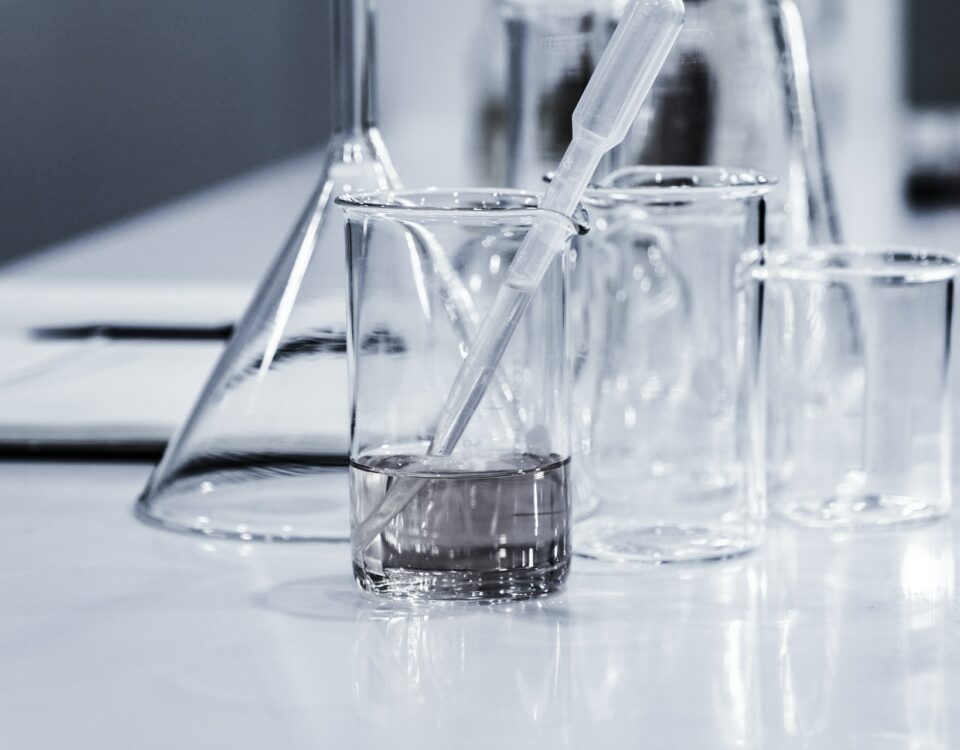
 A few years ago, a partner came to us with a difficult assignment. They were producing a mix of a volatile acid, something like 99% sulfuric acid with an alcohol solvent, in house. They needed to reduce the cost of producing and storing this chemical while also lowering risks to their employees.
December 23, 2021
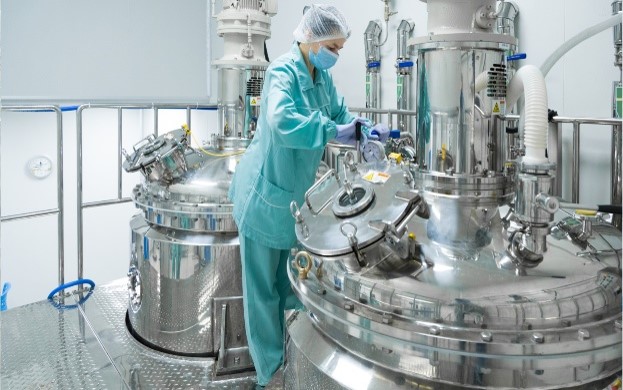
Toll Blending is a common service for chemical companies (e.g.: “toll blender”) to manufacture/fulfill chemistry blending for a partner in order to reduce the partner’s production risks or capital investments. RBP Chemical Technology works with partners around the globe to provide this service, as well as, to optimize their chemical processes. Here are six reasons why customers turn to RBP for their toll blending needs.
December 21, 2021
When companies have specific chemical needs but lack the resources to address these needs in house, outsourced chemical blending – or Toll Blending – is a valuable solution.
November 16, 2020
One of the main causes of plating defects is copper peeling. Copper peeling is really a disconcerting situation. If it happens, you’ve already put a lot of money, time, and effort to fabricate the circuit board up to this point as you come out of your electrolytic, or electroless copper, plating process. This becomes disconcerting because you may find out that the plated copper peels from either the laminate surface or from the electrical surface. Of course at that point, it’s very difficult to rework the board, and most likely that board at this time will be most likely scrapped.
August 26, 2020
Are all OSPs the same? And how does an OSP actually protect the copper base?
July 29, 2020
Circutek CC-720™ is an acidic cleaner/conditioner for use in the electroless copper metallization process in the PCB industry. It is formulated to remove fingerprints, light soil and other contaminants from copper foil. It also conditions non-metallic surfaces including glass fiber fabric and multiple resin systems used in the construction of high-reliability rigid, rigid-flex and flexible printed circuit boards. The Circutek CC-720 is formulated to affect maximum adsorption of palladium tin catalyst to insure uniform deposition of the subsequent electroless copper deposit.
July 15, 2020
RBP is proud to announce the release of MAGNUM N-499, an additional innovation to their PTH process product offering for printed circuit boards. MAGNUM N-499 is a specially designed neutralizer based on hydrogen peroxide that removes residues of manganese dioxide from drilled holes after permanganate desmear in preparation for metallization of multilayer circuit boards. MAGNUM N-499 is effective on a variety of resin materials including high performance epoxy resins and polyimide. It is easily replenished and does not require circuit boards to be dried prior to processing. MAGNUM N-499 should be used in conjunction with MAGNUM K-401 OXIDIZER or MAGNUM N-501 OXIDIZER for optimal performance in the desmear sequence.
May 8, 2020
RBP’s VP of Technology and Business Development, Mike Carano, recently sat down with John Johnson of Averatek and Nolan Johnson of I-Connect007 to discuss RBP’s new distribution agreement with Averatek. RBP recently announced that we would be supplying the supporting chemicals for Averatek’s A-SAP™ plating process. Click on the video below to hear the full discussion on this new distribution agreement.
April 21, 2020
Averatek Corporation is proud to announce that RBP Chemical Technology will become a new distribution partner. RBP will supply supporting chemistries that are needed by licensees of Averatek’s A-SAP™ process. The core LMI™ (Liquid Metal Ink) chemistry will continue to be supplied directly by Averatek. A-SAP™ is an advanced PCB manufacturing technology that enables feature sizes of 25 microns and below, effectively providing PCB designers with new opportunities to address the challenges of next generation electronics.
March 11, 2020
ONYX™ is a Direct Metallization System for High Reliability and Complex Printed Circuit Boards
March 4, 2020
RBP President, Ernie Litynski, recently sat down for an interview with Dick Crowe of the “Real Time With…” series while attending this year’s IPC APEX Expo. In the interview Ernie shares his background, his hopes for his new role as RBP’s President and his hopes for the company. Click on the image below to watch.
February 14, 2020
 RBP’s Vice President of Business Development and Technology, Mike Carano, was recently selected as a recipient for the Dieter Bergman IPC Fellowship Award at the 2020 IPC APEX EXPO. According to IPC, The Dieter Bergman IPC Fellowship Award is given to those “who have fostered a collaborative spirit, made significant contributions to standards development, and have consistently demonstrated a commitment to global standardization efforts and the electronics industry.”
December 3, 2019
RBP Chemical Technology (RBP), located in Milwaukee, Wisconsin, has named International Electronic Components (IEC) its exclusive distributor for PCB materials in North America.
December 2, 2019
RBP Chemical Technology is pleased to introduce another key waste treatment product to serve the metal finishing, electronics and photochemical milling industries. MetalTreat Chelate Eliminator-8 is formulated to eliminate waste of very highly chelated waste streams containing heavy metals.
November 11, 2019
MAGNUM S-450 is used to condition holes after drilling and before the desmear step in preparation for metallization. It is effective on a variety of resin materials including epoxy and polyimide and is replenishable. MAGNUM S-450 does not require circuit boards to be dried prior to processing.
September 9, 2019
VersaPrep is a specialty formulated product designed to clean and microetch a wide variety of metallic substrates. It is particularly useful in removing metallic oxides and providing a micro-roughened surface to enhance dry film adhesion as well as adhesion of other materials to the surface of the metal. VersaPrep easily deoxidizes and micro-etches copper, copper alloys, stainless steel, aluminum and Inconel.
July 29, 2019
RBP Chemical Technology is pleased to announce the release of Equipment Cleaner IV. Equipment Cleaner IV removes water hardness residues, photoresist scum and metal salt deposits from chemical processing equipment. The new process is specifically developed for the printed circuit board industry and is very useful for spray equipment. It causes no damage to metal or plastic parts and is completely odorless, making it the ideal process for printed circuit boards.
May 29, 2019
LDI Strip 77 a semi-aqueous photoresist stripper formulated for stripping very fine line and high density printed circuit boards. With properly controlled plating, LDI Strip 77 effectively produces particles 2 mil in diameter and smaller, greatly facilitating filtration. LDI Strip 77 provides complete resist removal with standard Dry Film and LDI Dry film. LDI Strip 77 contains a specially formulated additive package that protects metal surfaces against corrosion, including copper and tin. In addition the LDI 77 Strip enables ease of inspection at outerlayer AOI. LDI Strip 77 can be used in both spray and immersion applications. Working concentration of the LDI Strip 77 will vary based on customer specific processing requirements.
April 2, 2019
Watch Mike Carano, the Vice President of Technology and Business Development at RBP Chemical, discuss technology trends related to PCB fabrication and where the electronics manufacturing industry is headed. You can download the slides from this presentation in PDF format here.
March 12, 2019
Abstract by Michael Carano
August 24, 2018
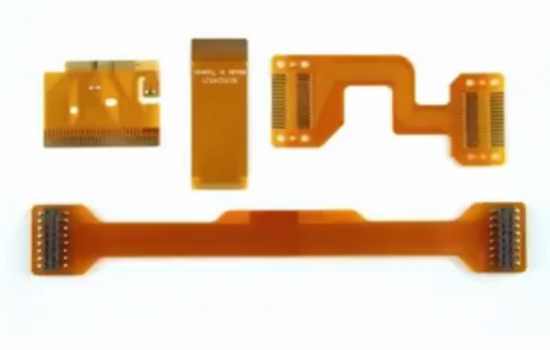 Flexible circuits were first introduced as a replacement for wire harnesses. The earliest versions date back to World War II. Today, flex and rigid flex circuits are filling an important role across multiple industries, include applications in the medical, automotive, and telecom fields.
August 17, 2018

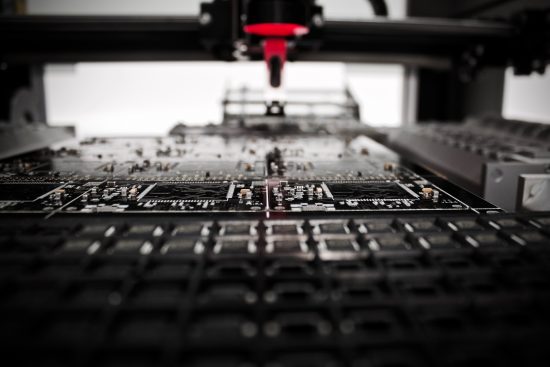 Today we are being asked by OEMs, particularly in the high-frequency space, for ways to minimize the amount of surface roughness to provide for enhanced electrical properties. Of course, when you minimize roughness you also run the risk of compromising the optimum adhesion of the smoothed material – especially if you don’t do any surface prep.
July 24, 2018
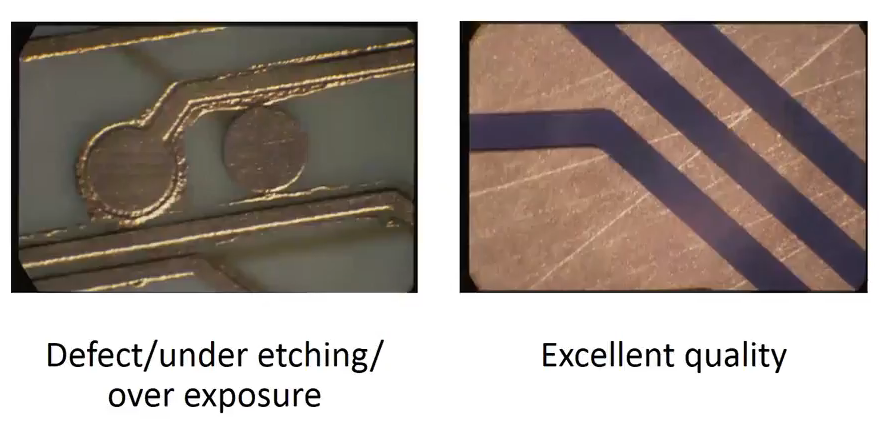
A beautifully registered multi-layer board, with nice drilled holes, level copper plating, and no evidence of separation. This is what we strive for in the manufacturing of printed circuit boards.
July 24, 2018
What finish should I use for my PCB Design? There’s no one single answer, it depends.
September 22, 2017