Let’s talk about hot air leveling, and of course, lead-free hot air leveling. If you’ve spent time in Asia and Europe, you’ll notice that in North America, the final finish market is still significantly different than it is in Asia and in Europe. Particularly in Asia, where they have moved away significantly from hot air leveling. Less than three percent of circuit boards made in Asia now use hot air solder leveling, or even lead-free hot air solder leveling. Whereas in North America, we’re still seeing a good portion, 35 to 40 percent of the circuit boards, using some type of hot air leveling, whether it be lead-free or lead based. Why is that? Hot air leveling has many advantages and disadvantages. Below we will highlight some of these advantages and disadvantages.
RBP Chemical Technology (RBP), located in Milwaukee, Wisconsin, has named International Electronic Components (IEC) its exclusive distributor for PCB materials in North America.
RBP Chemical Technology is pleased to introduce another key waste treatment product to serve the metal finishing, electronics and photochemical milling industries. MetalTreat Chelate Eliminator-8 is formulated to eliminate waste of very highly chelated waste streams containing heavy metals.
RBP Chemical Technology, the leaders in formulated and engineered processes for the medical device manufacturing industry, is proud to introduce CoCr Electropolish. This development is another innovation in RBP’s portfolio of cleaners, deoxidants and electropolishes/chemical polishes for metal based medical implants. Well recognized by major medical device companies, RBP Chemical Technology brings over 25 years’ experience in providing customized solutions for the corrosion protection and passivation of implantable medical devices.
MAGNUM S-450 is used to condition holes after drilling and before the desmear step in preparation for metallization. It is effective on a variety of resin materials including epoxy and polyimide and is replenishable. MAGNUM S-450 does not require circuit boards to be dried prior to processing.
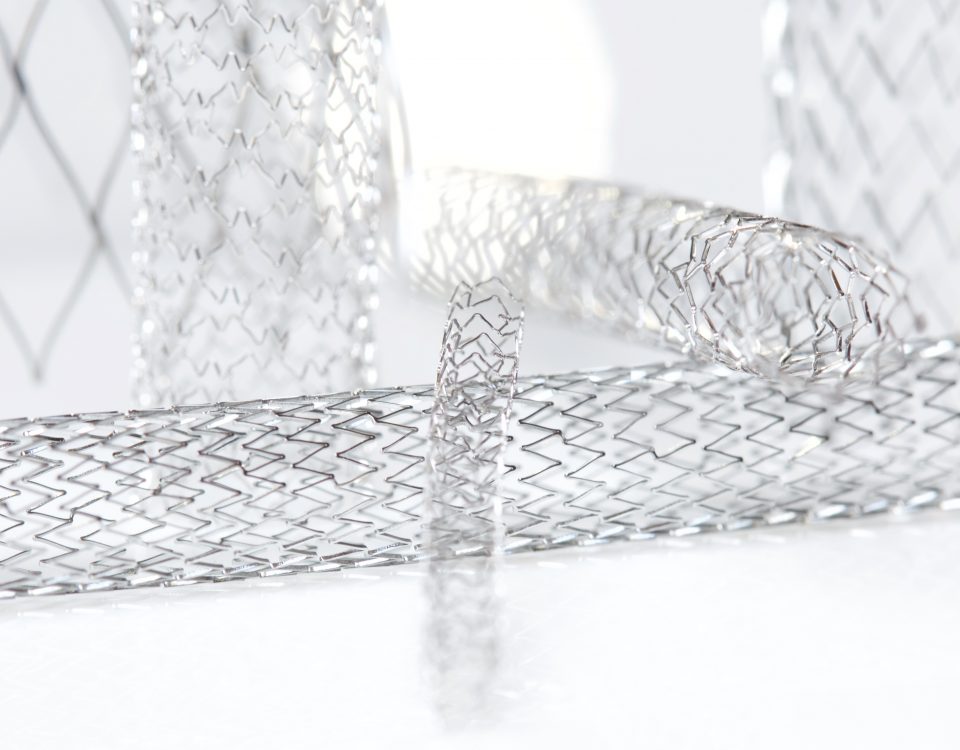
When it comes to electropolishing Nitinol, it’s important to know how to electropolish Nitinol at room temperature compared to electropolishing Nitinol at very low temperatures. Here are some things to keep in mind when electropolishing Nitinol at different temperatures.
Etchback and desmear serve many purposes. The first purpose of etchback is to assure the copper is clean. Assuring the copper is clean will then help form a metallurgical bond with the plating. The last purpose of etchback is to form a three-point contact around the inner layer. Why are each of these processes so important? Below we will go in more depth as to how each process effects the overall goal of etchback.
VersaPrep is a specialty formulated product designed to clean and microetch a wide variety of metallic substrates. It is particularly useful in removing metallic oxides and providing a micro-roughened surface to enhance dry film adhesion as well as adhesion of other materials to the surface of the metal. VersaPrep easily deoxidizes and micro-etches copper, copper alloys, stainless steel, aluminum and Inconel.
Electropolishing is a process used to remove materials from a metallic surface (in this case medical implant devices) to provide a level surface finish. Some of these surfaces including nitinol, cobalt chrome and titanium alloys. Electropolishing allows for less rejection of medical implant devices. Here are at RBP we offer a variety of electropolishes for the medical implant device industry. Here are some of the electropolishes we offer.
The leader in specialty chemicals for industrial applications, RBP Chemical Technology announces the release of a new biodegradable degreaser and release agent.
As a leader in specialty chemicals for the printing industry, we are proud to announce the release of a new state-of-the-art aqueous coating cleaner, AlKalene™ LT. This new product is designed to remove dry ink from press parts in the flexo-packaging industry.
RBP Chemical Technology is pleased to announce the release of Equipment Cleaner IV. Equipment Cleaner IV removes water hardness residues, photoresist scum and metal salt deposits from chemical processing equipment. The new process is specifically developed for the printed circuit board industry and is very useful for spray equipment. It causes no damage to metal or plastic parts and is completely odorless, making it the ideal process for printed circuit boards.
To ensure the effectiveness of medical implant devices it is essential that manufacturers correctly clean, deoxidize, polish and passivate these devices. Here is some relevant background pertaining to these processes.
Brighter, more vibrant colors in coldset printing applications? It’s possible with LIQUID GOLD 290 from RBP Chemical Technology . This mildly acidic fountain concentrate was specifically developed to enhance the color brilliance while fighting blanket buildup and piling – the leading causes of duller print images, ghosting, scumming and ink going where it doesn’t belong.
LDI Strip 77 a semi-aqueous photoresist stripper formulated for stripping very fine line and high density printed circuit boards. With properly controlled plating, LDI Strip 77 effectively produces particles 2 mil in diameter and smaller, greatly facilitating filtration. LDI Strip 77 provides complete resist removal with standard Dry Film and LDI Dry film. LDI Strip 77 contains a specially formulated additive package that protects metal surfaces against corrosion, including copper and tin. In addition the LDI 77 Strip enables ease of inspection at outerlayer AOI. LDI Strip 77 can be used in both spray and immersion applications. Working concentration of the LDI Strip 77 will vary based on customer specific processing requirements.
The IPC Education Foundation has established the “Michael Carano Teacher of Excellence Award” to support the professional development for secondary and post-secondary teachers, instructors and educators pursuing training related to the electronics industry. The award includes a $1,000 award prize and a one-year membership pass to IPC EDGE, IPC’s on-line learning platform.
Watch Mike Carano, the Vice President of Technology and Business Development at RBP Chemical, discuss technology trends related to PCB fabrication and where the electronics manufacturing industry is headed. You can download the slides from this presentation in PDF format here.
Abstract by Michael Carano
Practical Tools Teams with RBP Chemical Technology to Bring Medical and Electronics Manufacturing Solutions to MD&M 2019
Practical Tools Inc., a specialized supplier of tools, equipment and supplies to the medical manufacturing and electronics assembly industries, announces that it will welcome RBP Chemical Technology to their booth 2499 at the 2019 MD&M exhibition to take place February 5-7, 2019 at the Anaheim Convention Center, in Anaheim, CA.
Join us at IPC APEX Expo and learn about the new innovations in PCB fabrication chemistry and more.
Newsprint and coldset pressrooms choose Liquid Gold 820 fountain concentrate to maximize the performance of a wide array of plates – including processless. Liquid Gold 820 comes in neutral, mild acid, and hard water versions to meet all users’ water conditions and is formulated with special ingredients to keep the non-image area free of unwanted ink, resulting in sharp, clean print, and quick start ups that reduce paper waste. Like all RBP fountain concentrates, Liquid Gold 820 contains the latest in biocide technology to keep the dampening system clean and free of biological growth.
The Industry’s Best Companies. The Companies’ Best Minds.
Flexible circuits were first introduced as a replacement for wire harnesses. The earliest versions date back to World War II. Today, flex and rigid flex circuits are filling an important role across multiple industries, include applications in the medical, automotive, and telecom fields.
Today we are being asked by OEMs, particularly in the high-frequency space, for ways to minimize the amount of surface roughness to provide for enhanced electrical properties. Of course, when you minimize roughness you also run the risk of compromising the optimum adhesion of the smoothed material – especially if you don’t do any surface prep.
A beautifully registered multi-layer board, with nice drilled holes, level copper plating, and no evidence of separation. This is what we strive for in the manufacturing of printed circuit boards.