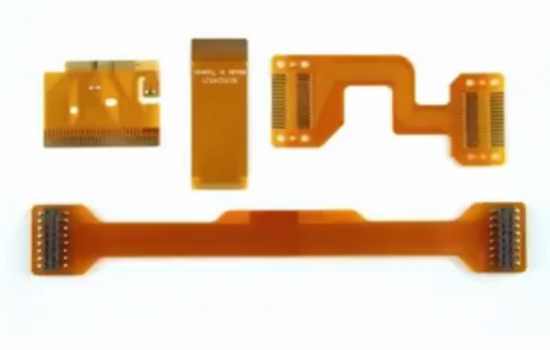
What finish should I use for my PCB Design? There’s no one single answer, it depends.
RBP Chemical Technology, the world-class supplier of proprietary chemicals and delivery devices for the coldset printing industry, is proud to introduce the latest in cleaning technology for pressrooms.
Date: February 26–March 1, 2018
Location: San Diego Convention Center
RBP Booth: 835
Floor Plan: View Floor Plan
RBP Chemical Technology, Inc. is excited to announce that it has completed the transition to ISO 9001:2015 one year ahead of schedule.
ISO 9001 is a standard that sets out the requirements for a quality management system to enhance customer satisfaction through the effective application of the system, including processes for improvement of the system and the assurance of conformity to customer and applicable statutory and regulatory requirements.
Mike Carano, RBP Vice President of Technology and Business Development leads a webinar to provide an overview of key technical issues driving changes in circuit board design and fabrication, including board thickness and HDI; line width and spaces, via structure and other measurements being driven by the trend toward miniaturization; trends in materials; printed electronics; and today’s biggest technical challenges.
The use of processless plates has been gaining traction for some time now. There are several advantages to using these plates. The most advantageous is the elimination of the chemistry used to develop and remove the non-image area of the plate. These chemistries typically have high alkalinity and can be difficult to handle as well as dispose of. By eliminating this step you remove any potential problems with the processor, associated chemistries and plate waste as the processor is completely eliminated.
Reliability Fundamentals: Failure Mechanisms and Success Through Process Modifications
12/08/2016
Visit RBP Chemical Technology at IPC APEX EXPO 2017
Cave Creek, Arizona July 12, 2016.
March 16, 2016 — The Nominating and Governance Committee of the IPC Board of Directors presented nine candidates for election at the IPC Annual Meeting on March 15, held in conjunction with IPC APEX EXPO 2016 at the Las Vegas Convention Center. Three candidates were elected as Board officers and will serve two-year terms. Three were elected as new Board members and three were selected for term renewal. All six Board members will serve a four-year term.
Michael Carano
RBP Chemical Technology
Article summary
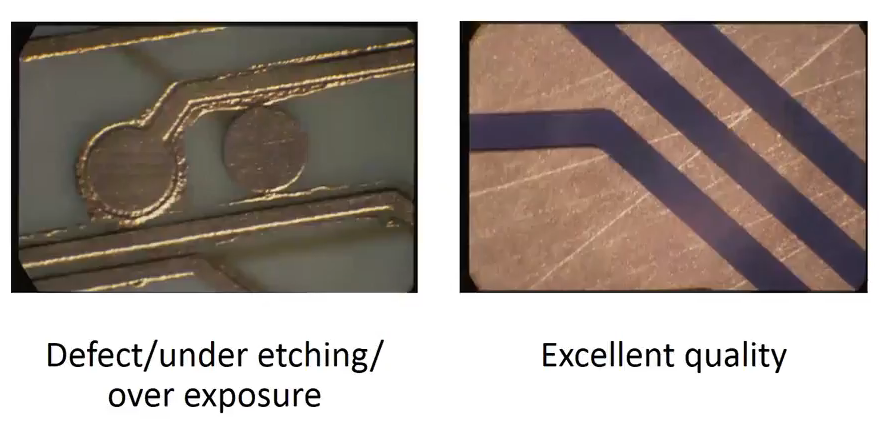
The photoimaging process is one of the first steps in the PCB fabrication process. In order to insure that the image of the circuitry conforms as close to the desired design as possible (i.e. lines and spaces), surface preparation of the copper foil surface is one of the critical success factors. Employing the optimum mix of surface cleaners and microetchants will provide a clean surface with sufficient surface area to promote dry film adhesion. The fabricator has numerous options and should determine the optimum process by accounting for the type of copper foil used as well as the classes of soils to be removed.
Introduction
There are several options available. In addition to pumice and aluminum oxide surface preparation, chemical cleaning as a means to insure optimum photoresist adhesion has gained significant popularity. In this ca
With the ever changing plate technology there is always a need for deletion pens in the pressroom. RBP Chemical Technology offers a variety of deletion pens for the newer plate technologies such as the violet and thermal ctp plates. You will find that deletion pens come with different chemistries; they may contain various solvents for removal of image area, water, and an acid to etch the aluminum oxide. Picking the right chemistry for the plate you are using is important. Certain types work better on thermal plates vs. the violet plates. Are the plates baked, are they process less types, or violet? Asking the right questions and finding the right pens can make your job a whole lot easier on press.
From poor print quality, the need for more frequent blanket washes, trouble printing solids and “smashed” blankets – piling is one of the more common challenges in today’s pressroom. In fact, many printers today have come to accept piling as a problem that is inherent to offset printing. However, understanding the causes of piling and implementing quick and effective solutions can go a long way in improving print quality and reducing paper waste and press downtime.
04/29/2015
RBP Chemical Technology (www.rbpchemical.com) announced the appointment of Michael Carano as vice president of technology and business development. In this role, Carano will lead RBP’s product and business development activities in the electronics, medical and mining industries worldwide.
As the global movement towards sustainability continues to gain momentum, more and more printers are incorporating environmentally-conscious practices into their pressrooms. Efforts to find greener printing solutions focus on minimizing waste, reducing consumption of vital resources and developing long-term sustainability practices.
One important way today’s printers can reduce their environmental footprint is through the use of Low VOC washes and solvents.
Low VOC products had a bad reputation early on in terms of quality, but things have changed. Through years of experimentation and research, RBP Chemical Technology has greatly improved the performance and quality of these product lines. Today’s products are not only the smarter choice for the environment, but are also very effective.
For parts without colored oxide:
Minimum recommended process for electropolishing Titanium alloys
- Clean in MicroClean Ti™ (RDZ-1849) (Time and temperature to be determined, no such thing as “too much”)
- Water Rinse
- Alcohol Rinse
- ElectroPolish Ti2 (RDZ-1676), 300+ Amps/ft2, up to 10 minutes
OR
Generic Electropolish (70/30 Methanol/sulfuric) which you can make, or can purchase Nitinol Titanium ElectroPolish (RDZ-1867), used at 7-10 volts, ~50 Amps/ft2, and below -20 degrees C. If you are making this exciting blend, you may want to read “Control of Methanol-Sulfuric blends”.
If the polishing is non-uniform, the surface may be oxidized, and require a treatment after the MicroClean Ti™: MicroClean MV™ (RDZ-1995), which, although it is a strong acid de-oxidizer it will NOT remove metal.
12/17/2014
NEWS RELEASE:
RBP Chemical Technology (www.rbpchemical.com) announced today its appointment of Tony Jackson as North American Sales Manager – Electronics.
As North American Sales Manager of RBP’s Electronics division, Jackson oversees all North American sales and technology service efforts of RBP’s electronics product lines. With a strong background in both chemistry and solutions-driven sales, Jackson works with RBP customers to offer customized solutions and maximize results.
Ultra Violet (UV) printing is different from conventional printing in a number of ways. The basic elements – ink and paper – are the same, but the overall process and the products involved are completely unique.
In conventional printing, ink dries when solvents found in the ink evaporate into the air and absorb into the paper. UV inks, on the other hand, are cured on press via UV lamps.
Combined with high-quality products, UV printing offers a wide range of benefits, making it the preferred choice for a wide range of unique and high-quality print work.
Never sacrifice quality – learn the importance of choosing high-quality products for your Pressroom
If you have spent any time in a press room or manufacturing facility, you may have heard the expression, “Garbage in = Garbage out.” In other words, the quality of your end product is only as good as the quality of the materials you use to produce it.
In order to provide your customers with a high-quality product, you have to invest in the quality of the materials you purchase for your pressroom. Unfortunately, many printers have learned this lesson the hard way.

RBP Chemical Technology first introduced the Unitrol® 2500, a one-step sheetfed fountain concentrate at the Chicago Print Show in September 2013.
Prior to the launch of the Unitrol 2500, chemical manufacturers were unsuccessful in producing a quality one-step fountain concentrate for the sheetfed department.
Given that the web department has had one-step founts for several years, why was finding a solution for the sheetfed department so difficult?
RBP rolled out LoxClean, a newly developed anilox roller cleaner formulated to remove and lift embedded ink from all types of anilox rollers.
Discover what makes this product the right choice for your flexo graphics operation: